As electric vehicles (EVs) gain traction worldwide, understanding how they perform in different climates has become essential for both drivers and industry stakeholders. Winter weather presents a clear challenge: EV range can decrease significantly in cold conditions. This article explores why that happens, how much impact temperatures have, and what data from Japan and global studies reveal about range loss in winter.
The Physics Behind Cold Weather Range Loss
Electric vehicles depend on lithium-ion batteries, and these batteries operate best within a moderate temperature range. In cold environments, the chemical reactions that allow lithium ions to move between electrodes slow down substantially. This reduced ionic mobility increases internal resistance and decreases both charging efficiency and usable energy output. At the same time, EVs use battery power to heat the cabin and warm the battery itself, unlike internal combustion engine vehicles, which can use excess engine heat for cabin warmth. These factors combine to reduce available driving range in cold conditions.
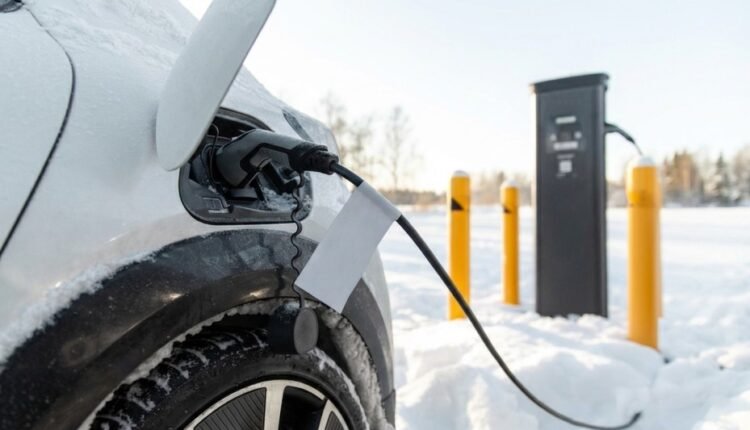
Cold weather also affects charging performance. At temperatures near or below 0 °C, the battery management system may restrict charging power to protect the battery, further complicating winter use.
Quantifying Range Loss: What Data Shows
Multiple independent sources and controlled tests indicate that EV range decreases noticeably as temperatures fall below freezing:
- Most EVs experience a 15–40% reduction in range in cold weather compared with mild conditions.
- Tests in Nordic winter conditions show that even leading models can lose up to 30% of their advertised range, though some high-performing models lose less.
- Reports from technical analyses note that below 0 °C the energy required for cabin heating and thermal management significantly adds to battery load, contributing to range reduction.
These figures are broadly consistent across climates where winter temperatures regularly dip below freezing.
Electric vehicles run on lithium-ion batteries, which are highly sensitive to cold. Cold slows lithium-ion battery reactions, slashing efficiency and range.
Insights from Japan’s Winter Performance
Although national Japanese EV sales figures remain modest compared with some Western and European markets, winter performance has been observed and documented in context of cold temperatures typical in northern Japan. Empirical tests and local analyses confirm that:
- In cold and snowy regions where temperatures often fall below 0 °C, EVs show noticeable drops in driving range compared with moderate weather performance.
- Range in snow and icy conditions has been documented at roughly 50–70% of normal range in some models during winter testing, reflecting the combined effect of temperature and energy demands of heating systems.
These patterns mirror the broader global experience but are particularly instructive given Japan’s varied winter climates — from milder coastal areas to harsher northern and mountainous regions.
Practical Implications for Drivers
Understanding the patterns of winter range loss is essential for effective EV use and planning. Key considerations include:
Thermal Management: Preconditioning the battery and cabin while the vehicle is still plugged in can reduce the energy drawn from the driving battery once on the road.
Heating Strategy: Using seat heaters and steering wheel warmers instead of full-cabin climate control can conserve significant battery energy.
Charging Behaviour: Anticipating slower charging and planning stops accordingly mitigates the risk of range shortfall in cold weather.
Driving Style: Smooth acceleration and regenerative braking usage can moderate energy demand and help preserve range.
While cold weather does decrease usable range, modern EVs incorporate thermal management systems designed to proactively address these effects. Adoption of heat pumps and battery warmers in new models also helps reduce winter impacts.
Conclusion
Cold weather range loss in EVs is well documented and arises from fundamental battery chemistry and increased energy demand for heating and thermal management. Real-world data indicates that typical losses fall in the 15–40% range when temperatures drop below freezing, with variance depending on model, battery system, and heating usage. Insights from Japan’s winter conditions align with these global trends and emphasise the need for informed driving and charging strategies to manage EV performance in cold climates.
For fleet planners, policymakers, and individual EV users, these facts underscore that winter range considerations are real but manageable with proper awareness and thermal planning, particularly as electrification accelerates across different geographies.